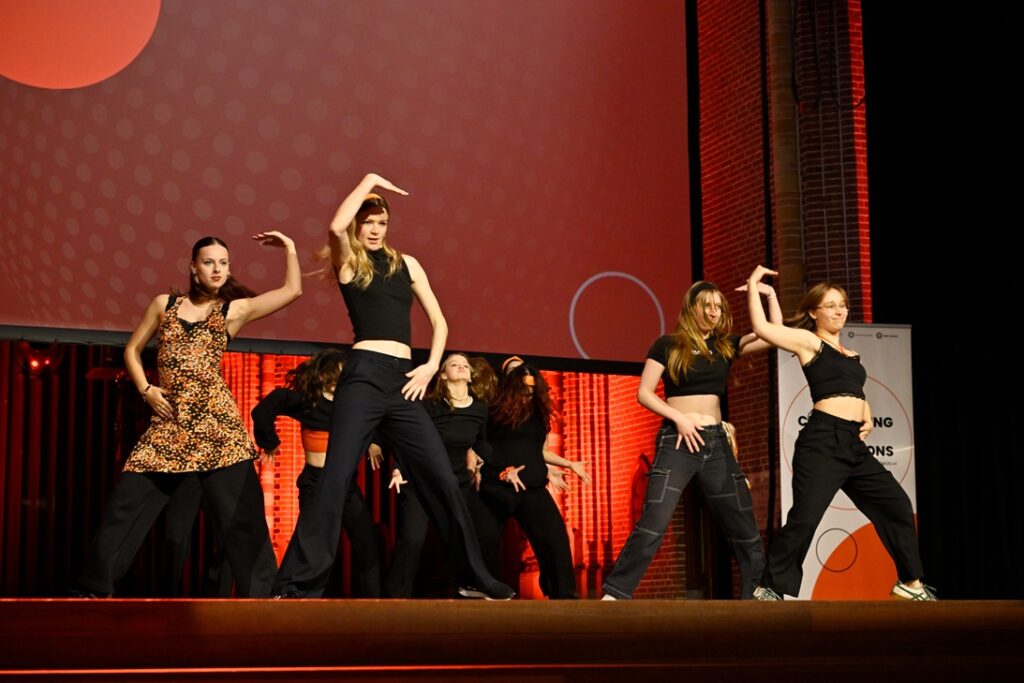
The EWUU Conference 2026 on 16 April in Eindhoven, opened on an energetic note with a lively dance performance by Footloose, the Eindhoven student dancing association. A moment that immediately set the tone for the day: open, engaging and connected. As participants arrived, one detail stood out: the provided cards illustrating the cycle of transdisciplinarity (the mushroom cycle). This visual reminder of how collaboration unfolds, from encounters to co-creation, quietly anchored the day’s central theme: Driving Transitions – In society, with society.
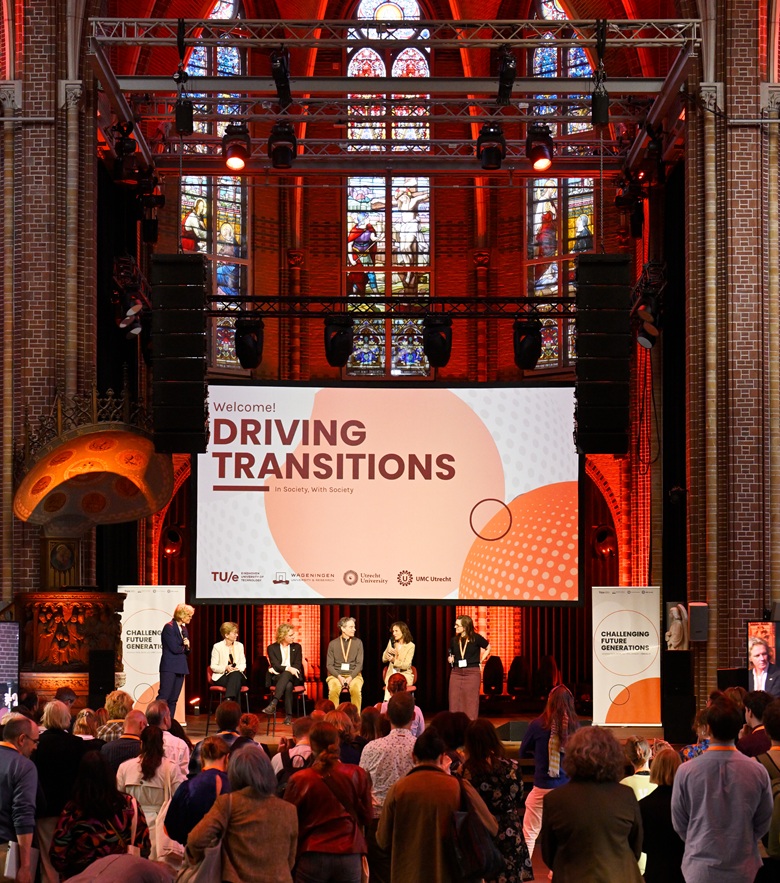
From the opening onwards, a shared sense of purpose was tangible. The conference emphasised that addressing today’s societal challenges requires more than disciplinary expertise alone. It calls for collaboration across institutions and, crucially, with society itself. This message resonated strongly in both the plenary programme, breakout sessions by all EWUU programmes and the many informal conversations that took place throughout the venue.


Welcome by Silvia Lenaerts
Silvia Lenaerts, Rector Magnificus of TU/e, opened the conference reflecting on the role of EWUU in today’s society: ‘Transitions of the kind we are discussing today, in energy, in health, in democracy, cities, require sustained effort from people and institutions willing to stay with hard questions over long periods of time. That is why a day like this one matters. The EWUU exists because our four institutions decided that the challenges ahead were larger than any of them could address alone. The people who are here today are choosing to work across the boundaries of their institutions, their disciplines and their assumptions. This has produced something significant: a community with shared habits of collaboration who know that the most important work rarely shows results within the timeframe of a single project’.
Keynote speakers
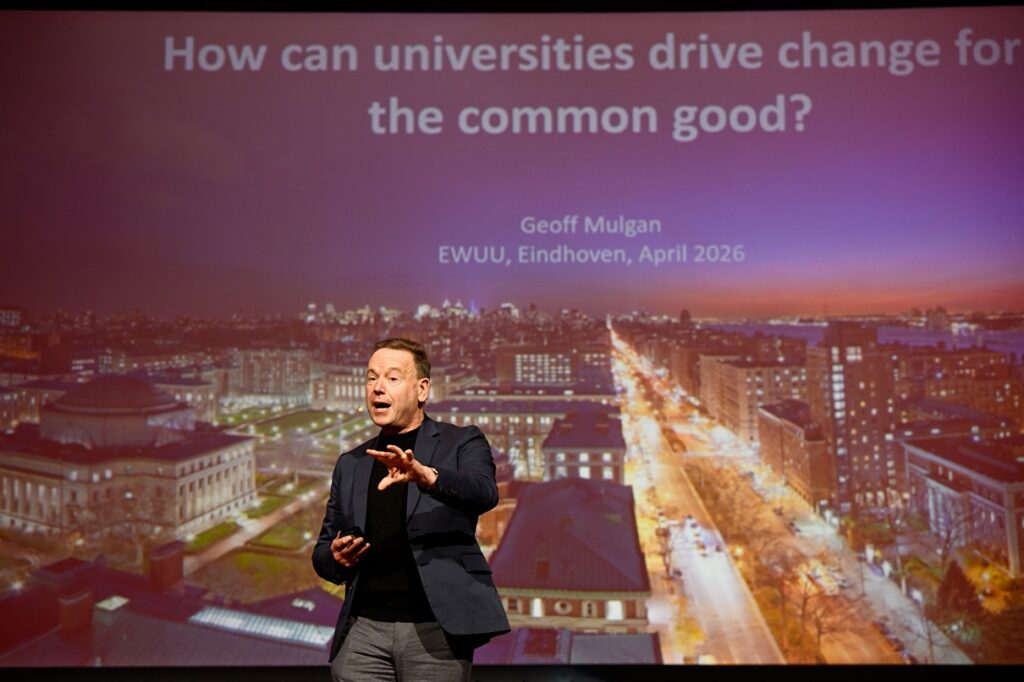
A key highlight was the keynote by Geoff Mulgan, who challenged participants to rethink the role of universities. He argued that academia should not only analyse the present or interpret the past, but also actively engage in imagining and shaping future possibilities. His call to invest equally in social and technological innovation struck a chord, particularly in the context of urgent transitions in areas such as health, democracy and urban life.
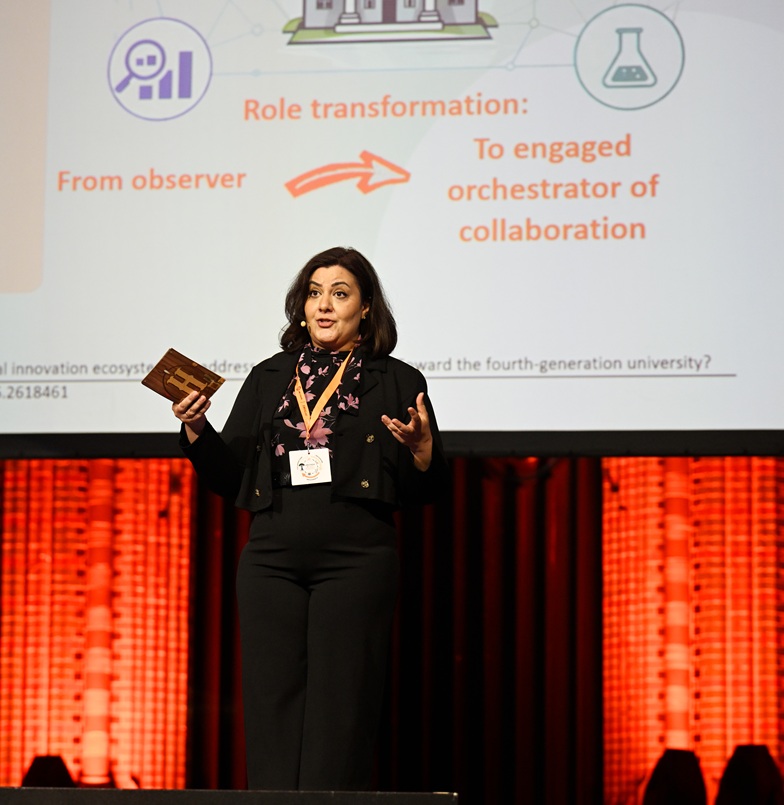
Building on this, Maral Mahdad’s keynote focused on the practical realities of collaboration. She made clear that meaningful partnerships require more than good intentions. Trust, shared language and a willingness to rethink established roles are essential to making collaboration work. Her perspective reinforced the idea that working in society, with society is not simply a guiding principle, but an ongoing organisational effort.
Breakout sessions
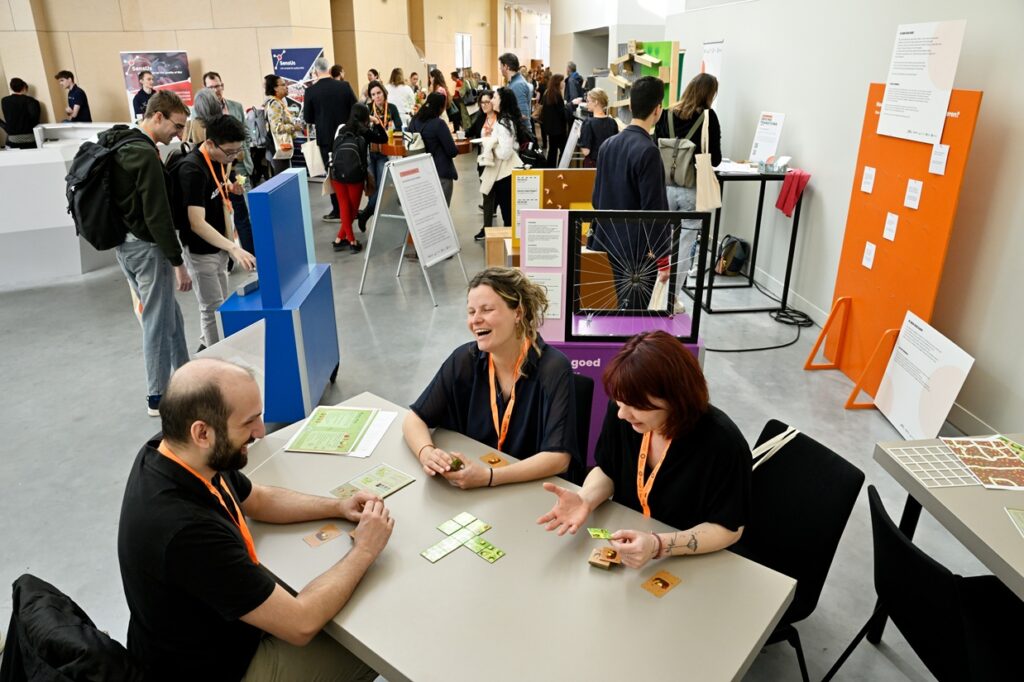
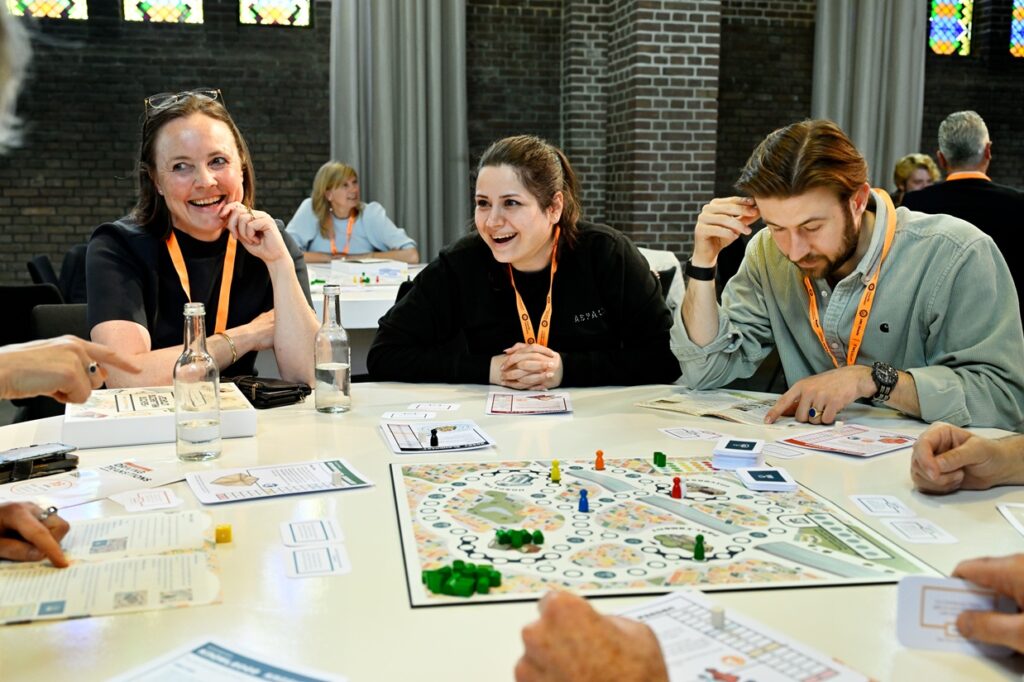
In the afternoon, the programme shifted to interactive breakout sessions, where the abstract ideas of the morning were translated into practice. Participants engaged with topics ranging from preventive health and youth participation to trustworthy AI, personal resilience, living systems, circular regional development and so many more topics to choose from! The sessions emphasised dialogue and co-creation, inviting participants to contribute their own experiences and insights.
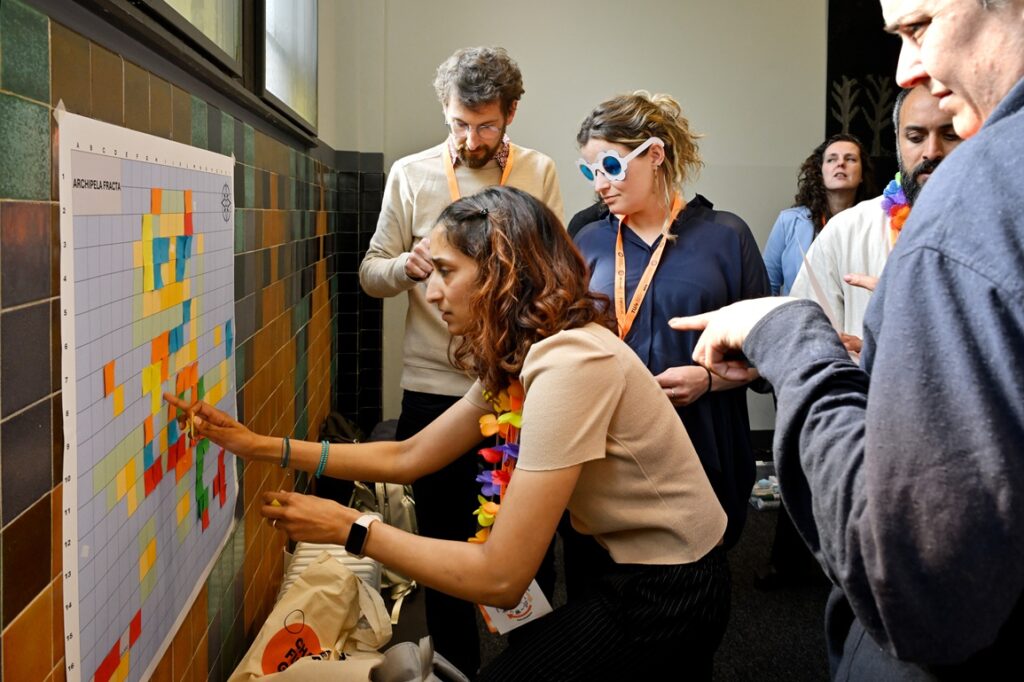
What stood out across these sessions was the diversity of perspectives and the willingness to engage across boundaries. Researchers, students and societal partners came together not only to share knowledge, but to question assumptions and explore new approaches. This created a dynamic learning environment, closely aligned with the transdisciplinary cycle that had been visible from the very start of the day.
Connections
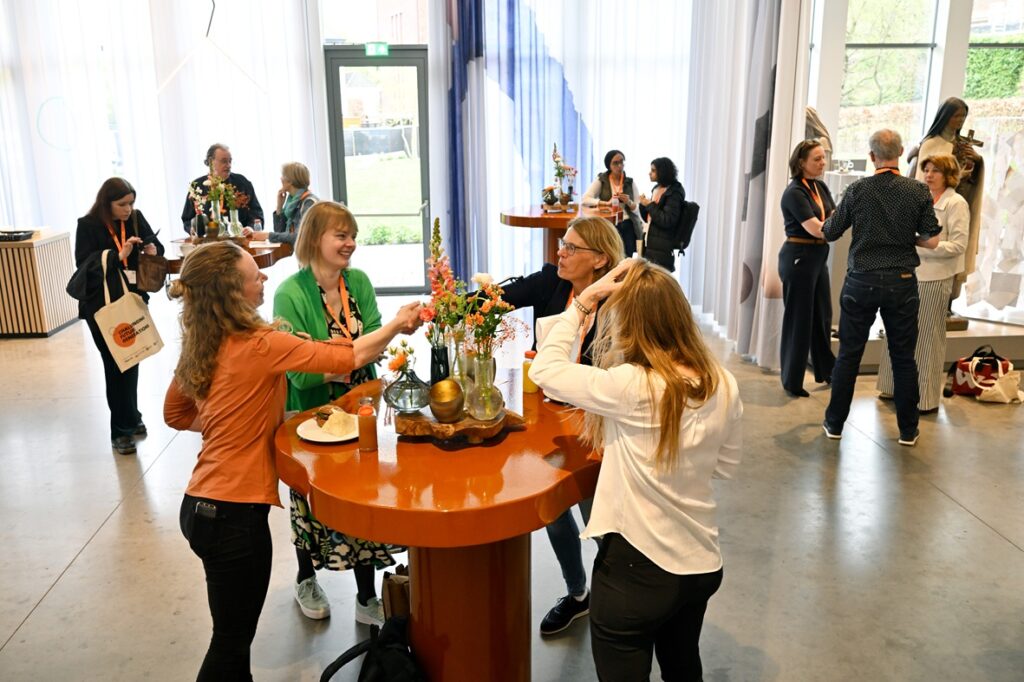
Conversations extended beyond the sessions into hallways and over coffee, with many participants noting the value of these encounters. The conference succeeded not only in sharing ideas, but in strengthening connections between people and perspectives.
Driving Transitions
As the day came to a close, a clear message emerged. Driving transitions requires more than expertise; it requires collaboration, openness and the courage to work differently. The EWUU alliance demonstrates that by bringing together complementary strengths, it is possible to create something greater than the sum of its parts.
The EWUU Conference 2026 was therefore not just a gathering, but a reflection of a growing community, one that is committed to working together, in society and with society, to address the complex challenges of our time.